★★★★★
“The visual structure makes it much easier to move students from observation to evidence-based discussion. The resources feel designed for real classrooms rather than just for display.”
Middle School Teacher
Maryland.



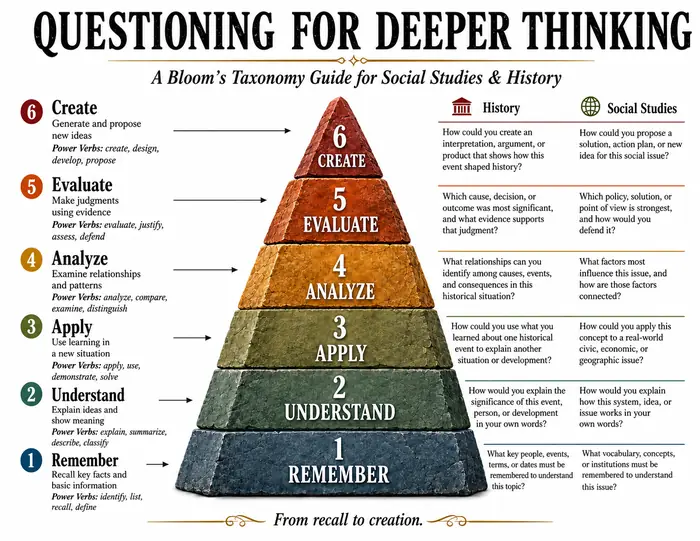
Use the complete Bloom’s Taxonomy teacher resource already featured on the interactive Bloom’s page, including the teacher packet, professional-print poster, and complete folder.
Choose a tool and move directly into the interactive resources already built across Examine the Past.
Choose a date and travel through major events, people, turning points, and stories connected to that day.
Move through the broad arc of human history and explore how major eras and developments connect.
Build stronger questions across the six levels of Bloom’s Taxonomy and move learners toward deeper thinking.
Explore history spatially through locations, geographic relationships, events, and historical context.
Connect today’s headlines to evidence, source evaluation, perspective, history, geography, and critical thinking.
Turn film into active viewing, historical analysis, evidence-based discussion, and purposeful writing.
See what they’re saying about us.
“The visual structure makes it much easier to move students from observation to evidence-based discussion. The resources feel designed for real classrooms rather than just for display.”
“I like how the materials balance strong visuals with historical thinking. Students have clear entry points, while I still have enough flexibility to adjust pacing and depth.”
“The organization is practical and teacher-friendly. It gives educators useful tools without making the lesson feel over-scripted.”
“The strongest part is the combination of engagement and academic purpose. The materials feel modern, but the learning goals remain clear.”
“This is the kind of resource set that can support both new teachers and experienced teachers who want stronger visual instruction and discussion routines.”
“The design makes complex content approachable. I especially appreciate the emphasis on evidence, questioning, and historical reasoning.”
“The materials are easy to navigate and visually inviting. They help turn history into something students can investigate instead of simply memorize.”
“The site presents a strong mix of classroom resources, interactive tools, and professional support. It feels cohesive and easy to explore.”
“The resources have a polished look, but more importantly, they encourage students to think, compare, question, and explain.”
“The visual-history approach gives students something concrete to react to before they write or discuss. That makes the transition into deeper analysis much smoother.”
Explore carefully crafted resources that make historical thinking more visual, engaging, and memorable.
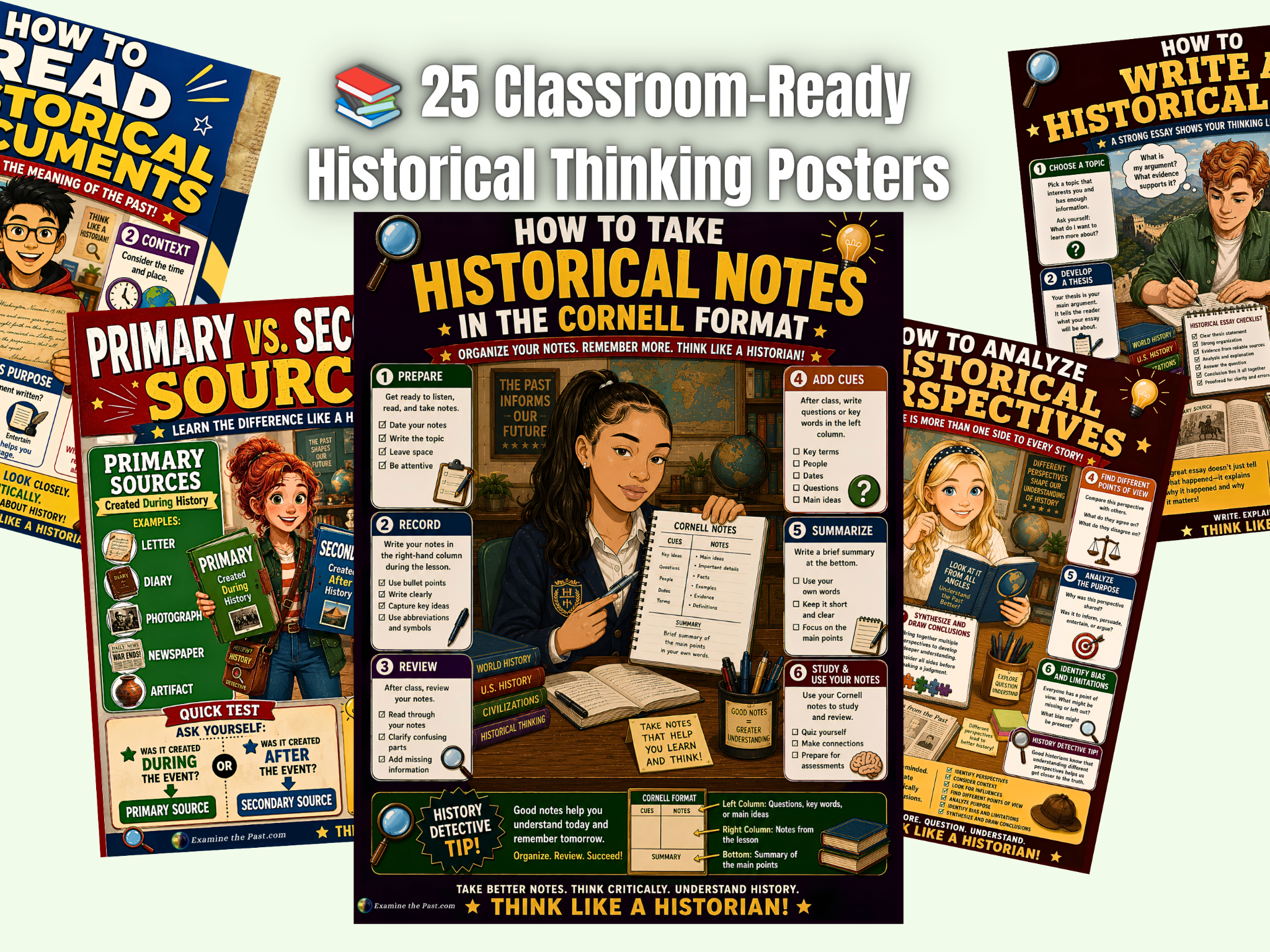
25 classroom-ready posters plus 5 advanced bonus posters focused on evidence, sources, maps, argumentation, note-taking, propaganda, debate, and more.
Details on Etsy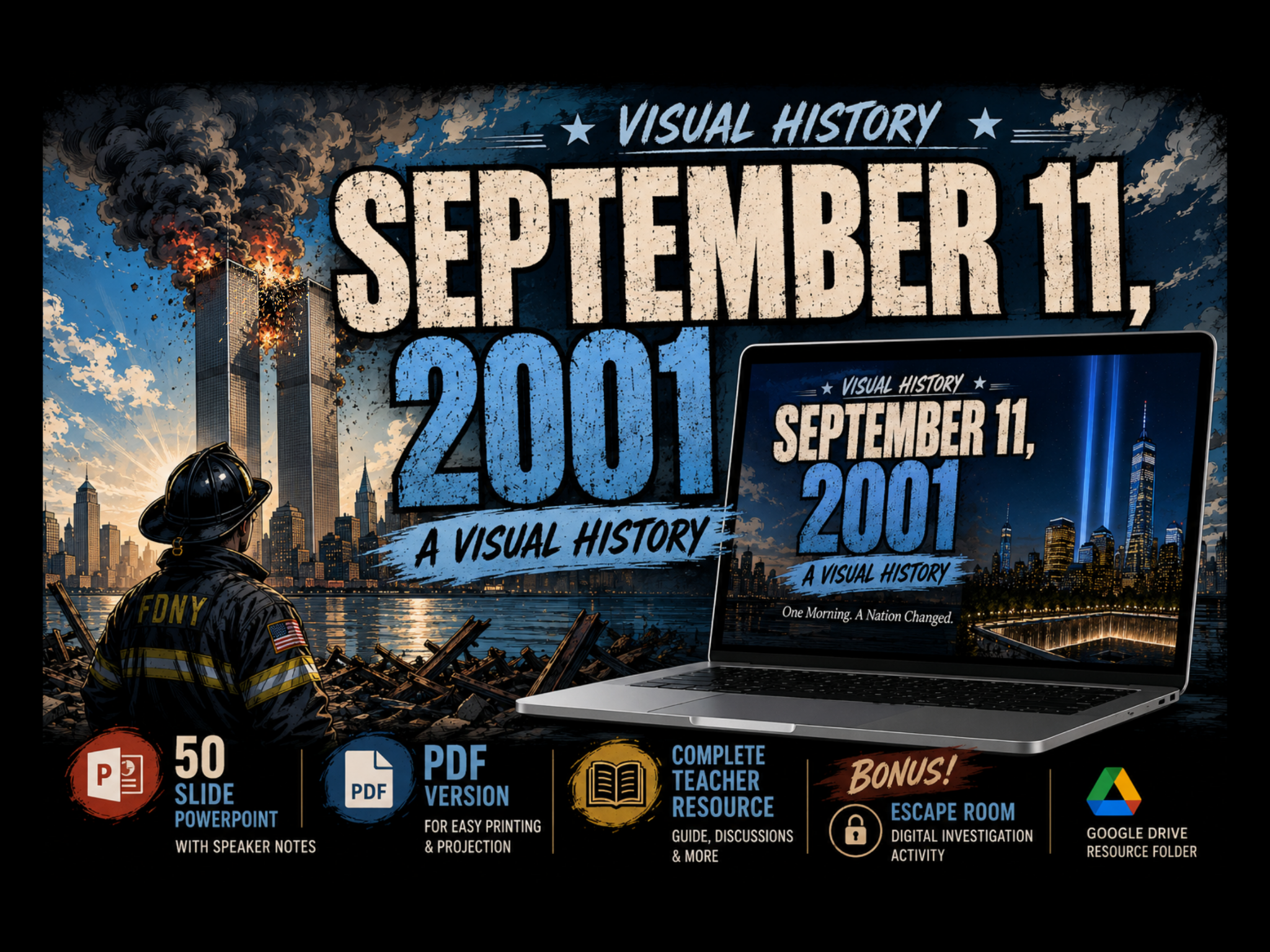
A Grades 6–12 visual-history lesson combining PowerPoint instruction, teacher guidance, evidence analysis, formative checks, and a bonus digital historical investigation.
View on Etsy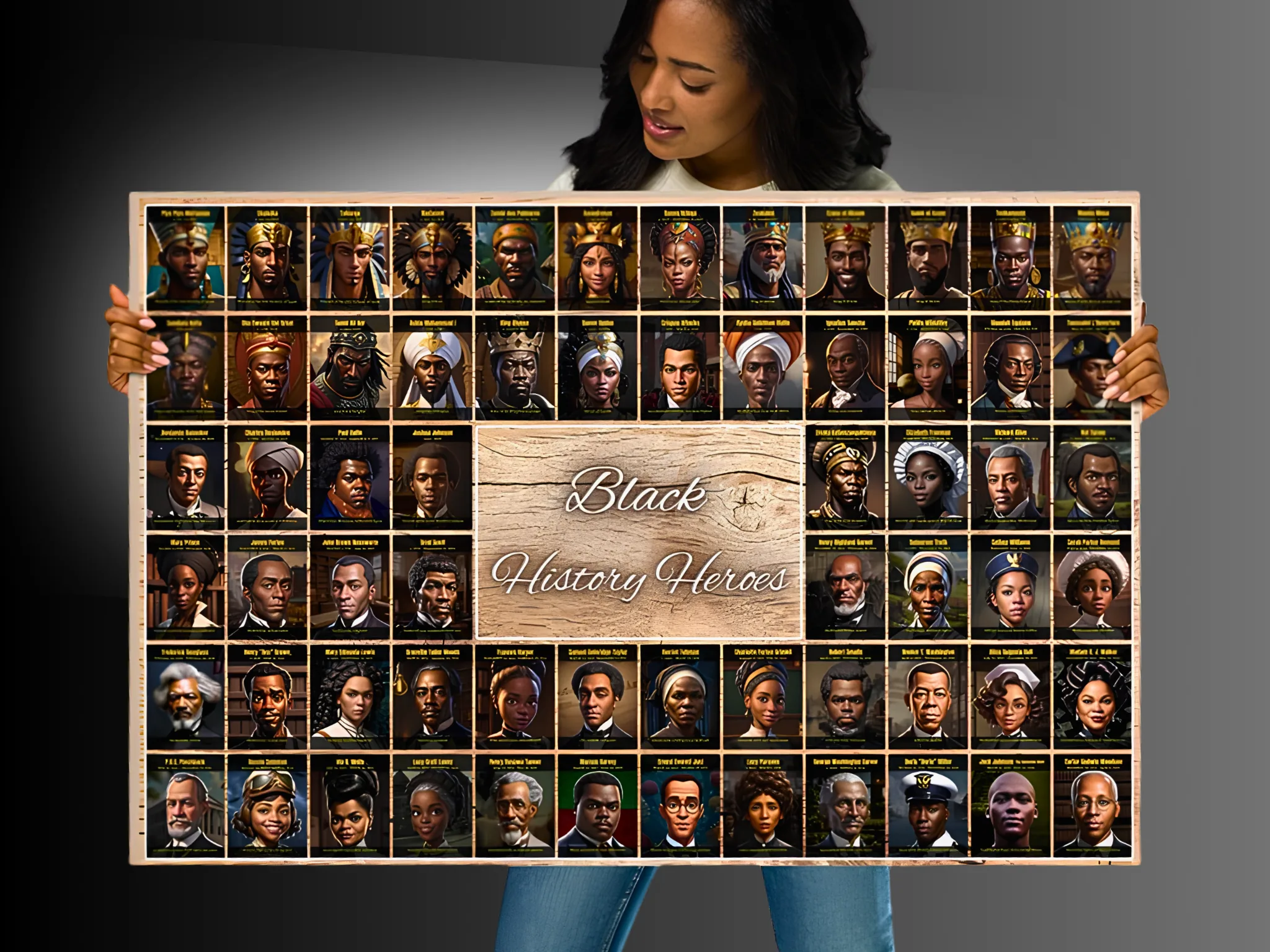
A striking visual poster featuring Black historical figures across eras, leadership, resistance, innovation, and culture.
I Want This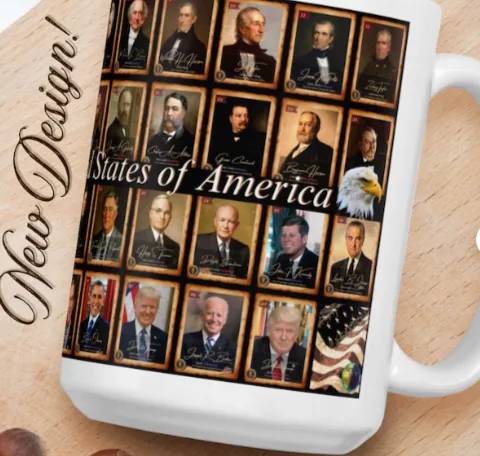
A functional history collectible featuring the U.S. presidency in a visual format designed for history enthusiasts, classrooms, offices, and gifts.
Gifts on Etsy
An Examine the Past product design built around Cornell-style note organization, cue questions, summaries, reflection, and review. Designed for class notes, meetings, study sessions, and structured thinking. # Cornell Method · Cornell University
Only on Amazon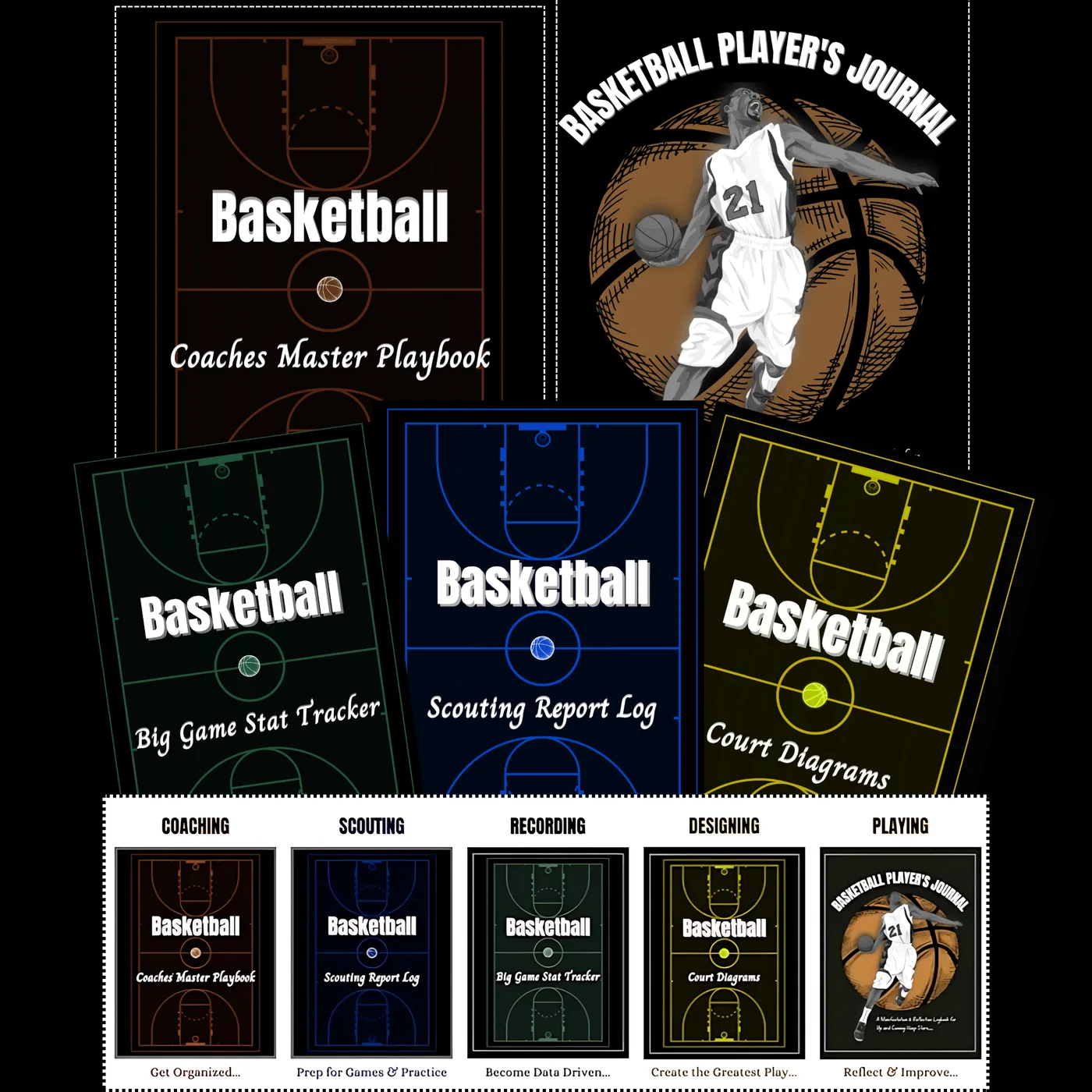
A practical basketball-development book series for coaches, players, and families, including scouting, coaching, stat tracking, planning, and development tools.
Order on AmazonExamine the Past combines interactive history learning, instructional design, maps, timelines, primary sources, games, and educator tools in one connected experience.
Explore American history through eras, turning points, primary sources, inquiry, and interactive lessons—from early America through the modern United States.
Study civilizations, exchange, conflict, innovation, empire, revolution, and global change across time and place.
Understand citizenship, rights, law, institutions, elections, constitutional principles, and how people participate in government.
Use maps and spatial thinking to understand location, movement, environment, regions, migration, trade, and historical change.
Explore African American history and the African diaspora through culture, resistance, achievement, migration, movements, and historical memory.
Study belief systems historically and respectfully, including origins, texts, practices, institutions, change, and relationships with society and power.
Trace chronology, turning points, cause and effect, and connections across eras.
Investigate borders, movement, migration, trade, conflict, empire, and change through interactive historical geography.
Use today's date as a doorway into people, events, themes, maps, timelines, and related lessons.
Turn historical thinking into challenges, mysteries, maps, source analysis, chronology, and immersive games.
Move beyond the old Teacher Tools into a connected educator section with practical instructional tools and professional resources.
Tell us who you are and what you need. This form prepares an email to Examine the Past with your selections and message.